This case study is a work in progress

Building UX at Current Health

400% team growth 1400% increase in active patients 3 strategic KRs
Team development Process design
Image showing the toggle component page in the design system The Nest

Situation

When I joined Current Health as Experience Director there was a UX function in place but it lacked some of foundations required to truly make it a success. The team was made up of two amazing UX designers who had done an excellent job but their progress had been restricted by a lack of representation at a more senior level.

In this case study I walk through some of the things I did to build the UX team and what outcomes they had

Enabling One Experience

25% increase in team satisfaction scores
Team development

The physical and digital experiences at Current Health were not only owned by different teams they were owned by entirely different departments. This led to inefficiencies and inconsistencies which caused confusion amongst patients and clinicians.

In order to combat this I set out to try and combine these two functions under my leadership.

Actions

  • Engaged members of the Physical Product experience team to gauge appetite on such a change
  • Built out business case for combining the teams and engaged with C-suite members to make the move happen
  • Designed team structure to support the two functions and introduced new job titles to better reflect roles and responsibilities
  • Redesigned process to ensure all work, whether physical or digital, went through a single Jira instance
  • Introduced Content role to oversee how we spoke to patients and clinicians across all mediums

Results

  • Increased satisfaction scores within Physical Product Experience function from 30% to 55%
  • Delivered a consistent experience for patient and clinicians across all channels
  • Combining the teams allowed us to identify strategic opportunities and led to the creation of the Product Delivery Strategy (PDS) which aimed to revolutionise our user experience and reduce internal delivery costs by 70%

Simplified BAU process

50% reduction in admin time 80% reduction in missed deadlines
Process design

With the physical and digital experiences now in sync we began to develop our Product Delivery Strategy (PDS). Work on this was hampered by small scale ‘urgent’ requests coming in from Sales and Implementation teams which required immediate attention and took a disproportionate amount of time to manage due to number of stakeholders involved.

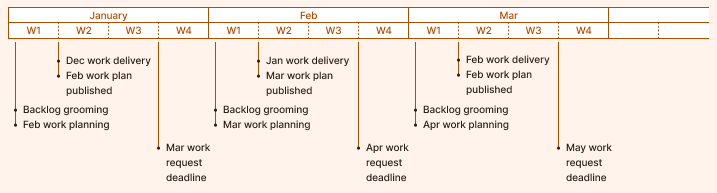
We needed to standardise our approach to this ‘BAU’ work to provide a simple way for the work to be requested, tracked and delivered. Doing so would help us manage our time better and dedicate time to PDS.
Actions

  • Engaged members of the Sales, Implementation and Customer success teams to better understand how the work arises and how deadlines are set
  • Worked with Product Engineers to design process that reduced admin burden but didn’t impact level and quality of work
  • Created business case for a Product Manager resource to be assigned to the team to help manage process
  • Presented new process to impacted teams to ensure each understood impacts and their role within it
Image showing the BAU process we created
The BAU process gave internal teams consistency in how work was requested, planned and delivered Select image to enlarge

Results

  • Reduced admin burden by 50% by having defined delivery times and clear escalation pathways
  • Allowed Experience team to better plan their workload allowing time to be ring fenced for personal development and strategic projects
  • Reduced missed deadlines for BAU work by 80% which led to increased trust wioth internal teams and customers allike

Focusing Discovery

60% decrease in discovery time
Process design

Discovery at Current Health often fell into two common pitfalls.

  • We thought we had enough information already: real discovery was skipped, design was misinformed, and time was wasted backtracking to understand the problem we were actually solving.
  • We felt we never knew enough: the objective of discovery wasn’t defined, so it went on indefinitely, looping back on itself as we tried to define its purpose while doing it.

It became clear that discovery needed more structure so I took on responsibility of redesigning how we approached this stage to ensure it was both timely and focused
Actions

  • Formed small team made up of UXers, Delivery manager, Product Director and Engineering manager
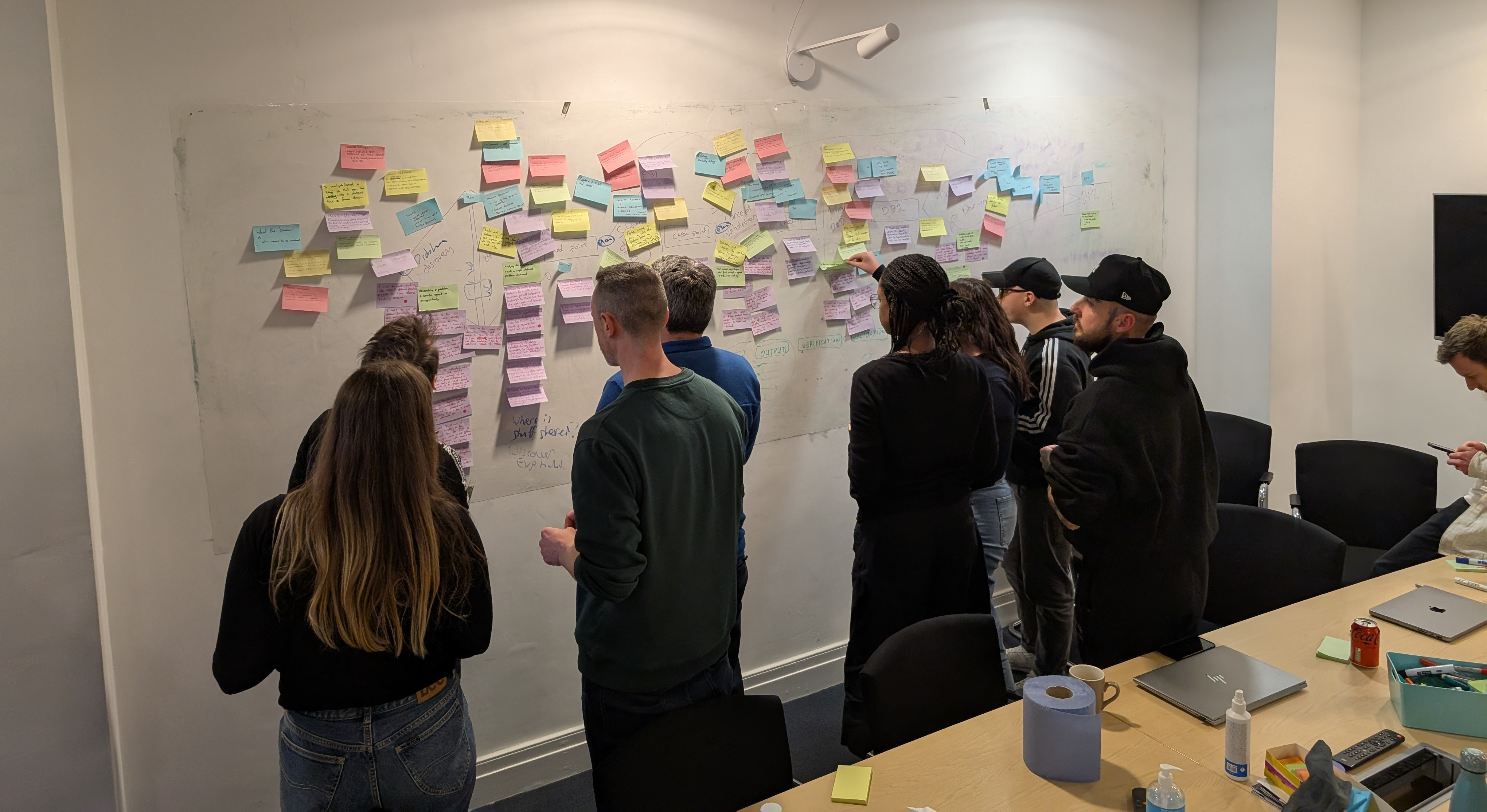
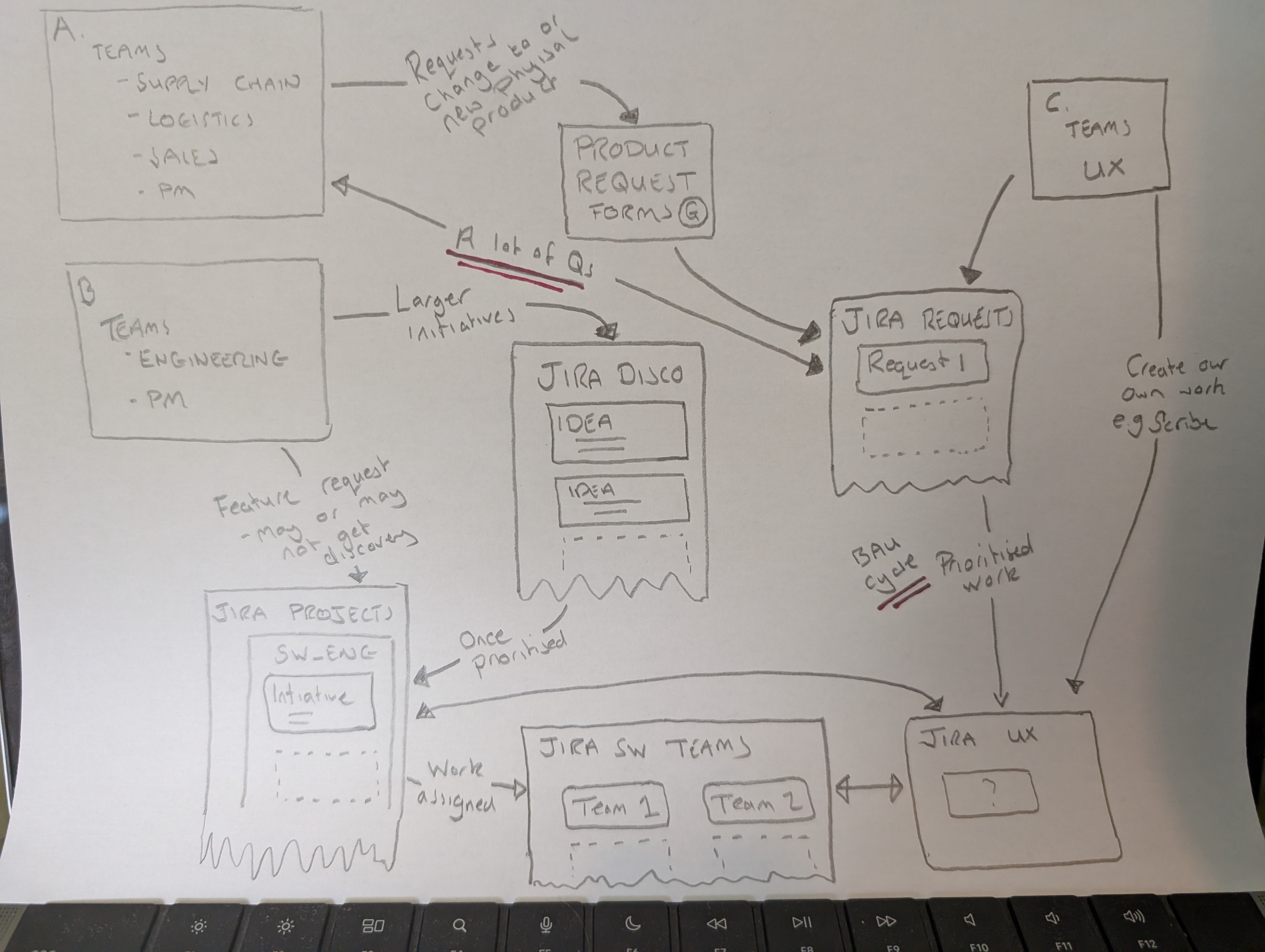
  • Ran workshop to map current workflows, issues and bottlenecks
  • Investigated technology solutions currently in use to assess capabilities
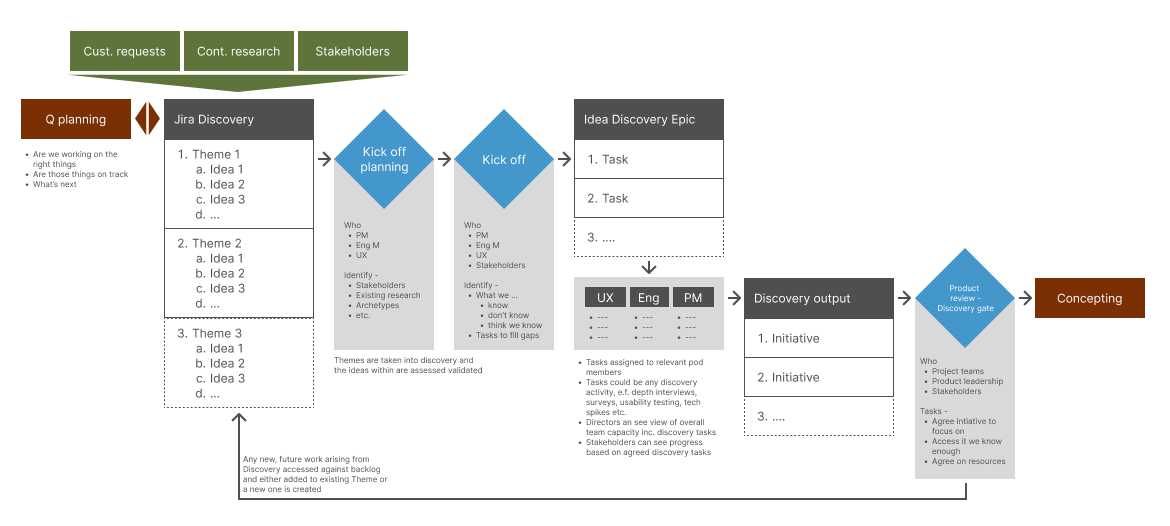
  • Created workflow which incoroporated Jira Discovery to plan and map tasks
  • Created templated kick-off workshops, user archetypes and Task risk tracker
  • Trialed new workflow with 3 projects and iterated flow based on findings
  • Succesfully rollled out new flow to all projects
Image showing process workshop with UX team Image showing an output from the process workshop Image showing the process we rolled out
We ran a number of workshops with different teams to create the process we rolled out Select an image to enlarge

Results

  • A 60% reduction in the amount of time spent in discovery
  • A significant reduction in thrashing between design and discovery
  • A clearer, shared understaning from Designer to Senior Stakeholder about the problem we were trying to solve
Back to case studies